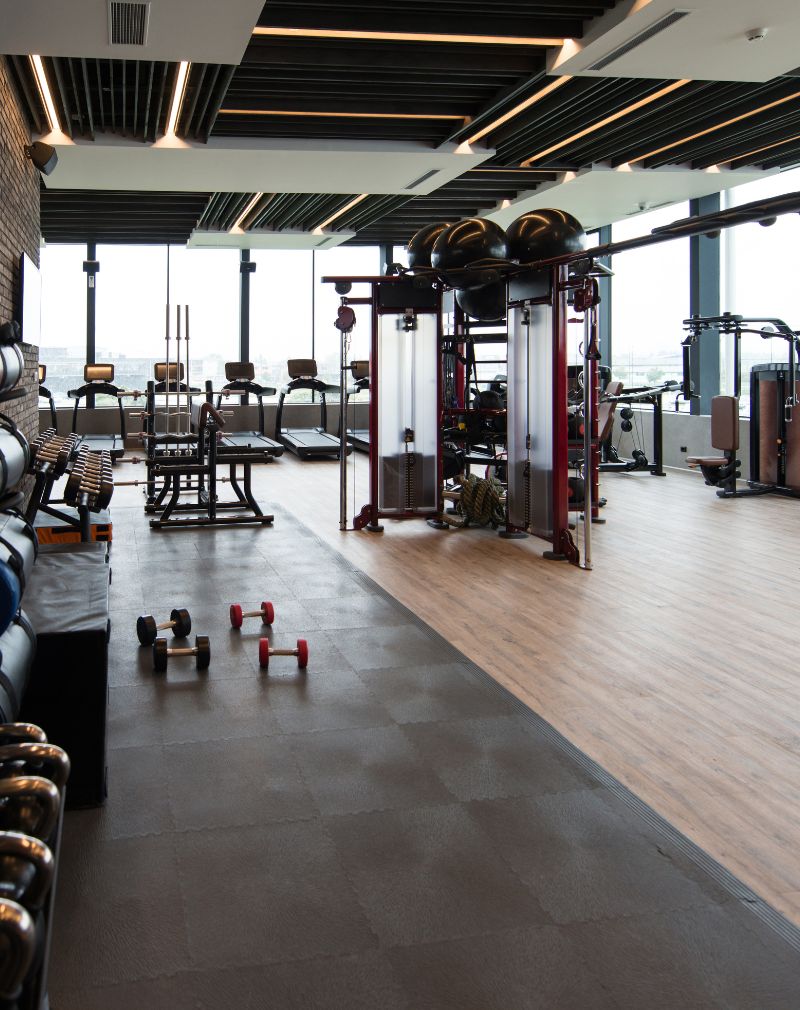
Fitness has never been more celebrated, or more quietly misunderstood. The line between commitment and compulsion is thin, and most people cross it without noticing.
Research published in the Journal of Behavioral Addictions estimates that between 3 and 5 percent of regular exercisers meet the criteria for exercise addiction, a pattern marked not by athletic ambition but by psychological need. Those numbers are almost certainly low, because most people who exercise compulsively don’t recognize it as a problem.
The praise makes it harder. When the behavior looks like discipline from the outside, the person inside rarely gets asked how they actually feel about rest. What exercise costs them emotionally when they skip it doesn’t come up in conversation.
The Eating Disorders Department at The American Wellness Center in Dubai Healthcare City sees this pattern with some regularity, often alongside food restriction, body image distress, or both. Not because exercise is dangerous, but because the reasons behind it sometimes are.
At some point, movement stops being something you do for your body and starts being something you do to your body. The distinction matters more than most people expect.
What Compulsive Exercise Actually Looks Like
The clearest sign isn’t how often someone trains. It’s what happens when they can’t.
A rest day that triggers guilt, irritability, or a creeping sense of wrongness isn’t recovery, it’s data. When the absence of exercise causes more distress than the presence of it brings relief, something has shifted.
The shift from enjoyment to obligation happens quietly. What started as a mood boost becomes a non-negotiable. What felt chosen starts to feel required.
Some of the clearest behavioral markers:
- Exercising through injury, illness, or visible exhaustion
- Canceling social plans because a workout wasn’t done
- Measuring the day’s worth by whether exercise happened
- Feeling a need to compensate for eating with movement
- Returning to the gym after minimal or no recovery
None of these are signs of dedication. They’re signs that exercise has taken on a role it was never meant to play.
The person doing these things often looks fine from the outside. They look committed. They look healthy. That’s part of what makes this so difficult to name.
The Psychology Underneath
Exercise is one of the most effective mood regulators available. That’s not a flaw in the behavior, it’s just a fact about how the brain works. The problem comes when regulation becomes the only function movement serves.
When someone is anxious, overwhelmed, or unable to process difficult feelings, the gym offers a place where effort equals outcome. You push, you sweat, you see results. In a life that often doesn’t work that way, that certainty is genuinely comforting.
Control is the underlying currency. And the need for control, especially over the body, rarely exists in isolation from how someone feels about themselves.
Compulsive exercise and disordered eating overlap more than most people expect. Research consistently shows that a significant portion of people with anorexia use exercise as part of the restriction cycle, not for fitness but for erasure. The body becomes something to shrink, to discipline, to earn. Support for anorexia nervosa almost always has to account for this, because treating the food behaviors without addressing the movement compulsion leaves the mechanism intact.
The identity piece runs deep. For many people, being “the person who trains every day” becomes load-bearing. Remove it and something underneath feels unstable, even empty. That instability is worth paying attention to, because it usually points to something the exercise was covering.
How the Body Keeps Score
The body gives signals long before the mind is ready to listen. Fatigue that doesn’t lift with sleep. Recurring injuries in the same places. A performance plateau that no amount of extra training resolves. These are not signs to push through. They’re the body asking a question.
Relative Energy Deficiency in Sport, known as RED-S, is a condition that develops when energy expenditure consistently exceeds intake over time. It affects bone density, hormonal function, cardiovascular health, and immune response, often in people who appear to be in excellent physical shape. Studies published in the British Journal of Sports Medicine have found RED-S present in up to 60 percent of female endurance athletes and more than 30 percent of male athletes, many of whom had no idea.
The Female Athlete Triad, a related condition, describes the intersection of low energy availability, menstrual dysfunction, and bone loss. These three don’t always appear together, but the presence of one warrants a closer look at the others.
What gets missed most often:
- Stress fractures in active people attributed to “overtraining” rather than energy deficit
- Loss of menstrual periods accepted as a normal consequence of being fit
- Mood instability and cognitive fog read as life stress rather than physiological depletion
The immune system is also a quiet casualty. Chronic over-exercise without adequate recovery suppresses immune function measurably, a finding replicated across multiple sports medicine studies. Getting sick repeatedly while maintaining a rigorous training schedule is not bad luck.
The body is not failing. It’s communicating.
When Fitness Culture Makes It Harder to See
The culture around exercise is uniquely good at disguising a problem as a virtue. Discipline is praised. Rest is treated with suspicion. “I never miss a day” is said with pride, not concern.
Social media amplifies this. Workout logs, progress photos, training streaks, all of it creates an environment where more is always better and stopping feels like weakness. The algorithm rewards consistency regardless of what’s driving it.
Praise is what makes this particularly complicated. When friends, colleagues, and even family celebrate the behavior, the internal alarm gets harder to hear. Nobody tells you they’re worried. They tell you you look great.
Body Image and Self-Esteem Counseling addresses exactly this layer: the gap between how someone appears to others and what’s actually happening inside. Because a person can look strong and feel completely unraveled, and the two don’t cancel each other out.
The hardest conversations to have are the ones where everything looks like success.
Where Eating Disorders Enter
Compulsive exercise and eating disorders share more territory than most people recognize. The behaviors can run parallel for months before anyone sees them as part of the same pattern.
In anorexia, exercise deepens restriction. It isn’t about fitness. It’s about burning what was eaten, or justifying eating less. You cannot fully address one without addressing the other.
In bulimia, excessive exercise functions as compensation, psychologically identical to purging. The brain treats it the same way: something happened, now undo it. Bulimia Nervosa Counseling works specifically with this mechanism, because the compensation is almost never really about the food.
What makes the overlap so easy to miss is that the exercise doesn’t look like a symptom. It looks like effort. People around them often reinforce it. Clinicians sometimes miss it too.
The behaviors reinforce each other quietly:
- Restriction increases anxiety, which increases the urge to move
- Compensation through exercise eases guilt briefly, then resets the need
- The identity built around training makes rest feel like failure
- By the time someone sees the pattern, it has become the structure their day is built around
Dismantling it requires more than awareness. It requires understanding what it was holding up.
What Recovery Looks Like
Recovery is not about stopping exercise. That framing almost always fails. The goal is a person who can choose not to go without their mood collapsing. Who can rest through an injury without spiraling.
That shift doesn’t happen through willpower alone. The psychological drivers, the need for control, the identity built around effort, the emotions being managed through movement, all require proper clinical support to work through.
Body awareness runs alongside this. Many people with compulsive exercise patterns have stopped registering the body’s signals entirely. Rebuilding that connection is slow, but it’s where genuine recovery begins.
Progress is rarely linear. There are days when rest feels manageable and days when it doesn’t, and both happen well into recovery. That’s not failure. It’s the nature of unlearning something the nervous system treated as essential for years.
The question worth sitting with isn’t whether the exercise is too much. It’s whether you actually have a choice.
When Movement Stops Feeling Like a Choice
Exercise was never meant to be something to survive. It was meant to be something that supports a life, not one that quietly replaces it.
The distance between dedication and compulsion is smaller than most people expect. And the fact that nobody around you questioned it doesn’t mean nothing was wrong.
Asking for support isn’t an admission that the body failed. It’s a recognition that the mind has been carrying something too heavy, for too long, alone.
The Eating Disorders Department at The American Wellness Center in Dubai Healthcare City works with people at every stage of this, including the stage where someone isn’t sure there’s a problem yet. That uncertainty is a valid place to start.
If rest feels like punishment and movement feels like survival, something deserves attention. Not later. Now.