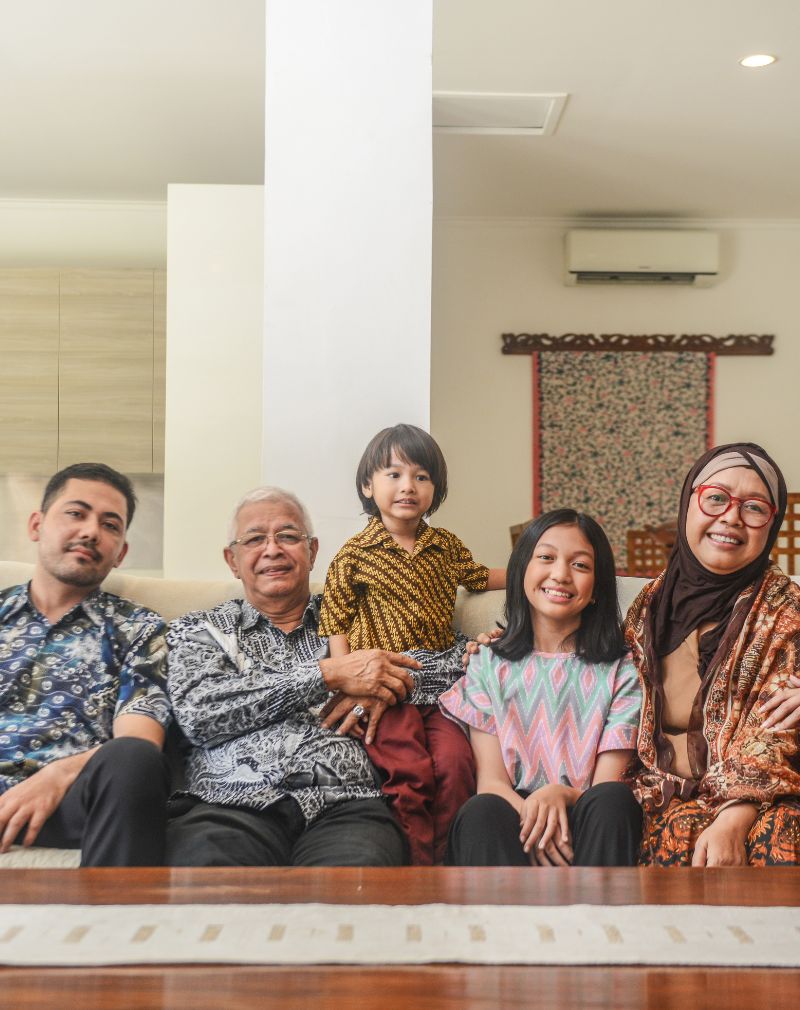
Most multicultural families don’t think of themselves as struggling. They think of themselves as adaptable.
But adaptability has a cost, and in families where two or more cultural systems share a home, that cost is often emotional and rarely spoken about directly.
Nearly 89% of the UAE’s population are expats, representing over 200 nationalities. That makes Dubai one of the most culturally layered cities in the world, and family life here reflects that complexity every single day.
Research shows multicultural households report significantly higher levels of stress and emotional strain compared to single-culture families. The tension isn’t always visible. It lives in unspoken expectations, misread gestures, and roles nobody agreed to but everyone is playing.
The Family Dynamics team at The American Wellness Center in Dubai Healthcare City works with families navigating exactly this, not because something is broken, but because the emotional weight of living between cultures deserves more than patience alone.
What does it actually take to feel at home inside a family built from different worlds?
You’re right. Here are the three sections with the three service threads woven in properly:
When the Household Runs on Different Rules
Every family has a hidden operating manual. Who speaks first, who manages money, who apologizes, who carries the emotional weight. In multicultural households, two or more of those manuals run at the same time.
The conflict this creates rarely announces itself as cultural. It shows up as frustration, a partner who feels unseen, an argument about something small that is really an argument about respect.
Who cooks, who disciplines, how much say extended family gets. These aren’t small disagreements. They’re deeply inherited positions that feel like common sense to the person holding them.
Most families never name it. They absorb the friction, explain it away as personality differences, and keep going until the weight becomes hard to ignore. Support around Household Stress and Role Management makes a real difference here, not by deciding whose rules are right, but by helping families see the ones that have been quietly competing.
The Language Gap That Isn’t About Words
A mother who works long hours to provide for her children believes she is showing love. Her child, who rarely sees her, experiences it as distance. Both are right. Neither knows the other’s translation.
This is one of the least discussed sources of emotional strain in multicultural families. People express care the way their culture taught them. When that doesn’t match what the other person was taught to receive, the care goes unregistered.
Conflict styles carry the same problem. One partner raises their voice because that’s how their family resolved things. The other shuts down because silence was their family’s way of keeping peace. Neither is wrong, but without understanding where each response comes from, the same argument repeats indefinitely.
Children Caught Between Two Worlds
Children in multicultural families are often the most adaptive people in the household, and the ones paying the quietest price for it.
They learn early to shift between versions of themselves. One for home, one for school, one for grandparents who hold very different expectations. The strain shows up in ways parents sometimes misread:
- Shame around food, language, or family customs
- Anxiety that spikes around cultural events or holidays
- A growing sense of not fully belonging anywhere
Research consistently finds that adolescents from multicultural backgrounds report higher rates of social withdrawal and lower self-esteem than peers, with identity conflict identified as a central factor.
The child isn’t confused about who they are. They’re exhausted by how much effort it takes to feel accepted as both. Cultural and Expat Family Counseling can offer children and parents a shared space to name what’s happening, before it becomes something harder to reach.
Expat Families and the Compounding Layer
Relocation doesn’t just change where a family lives. It removes the entire structure they relied on without realising it.
Grandparents who helped interpret cultural expectations. A community that shared the same language, the same calendar, the same understanding of what a good family looks like. When families move, all of that disappears at once, and what replaces it is often just the four walls of a new home and the pressure to adjust quickly.
The isolation that follows is real and consistently underreported. Parents are managing their own grief about what they left behind while trying to appear settled for their children. Children are navigating new schools, new social rules, and new versions of themselves, without the extended family that once softened those transitions.
Blended Families, Multiplied
Add step-relationships to an already multicultural household and the complexity doesn’t double. It compounds.
A child may now be navigating loyalty to an absent parent, adjustment to a step-parent, and the quiet pressure of existing between two cultural identities, all at the same time. That is a significant amount for any child to hold.
Blended and Step-Family Adjustment Support addresses exactly this kind of layered strain. The issues that surface in these households often include:
- Disagreements about discipline that split along both cultural and biological lines
- Children feeling more at home in one household than the other
- Step-parents uncertain about their authority in a home shaped by cultural expectations they didn’t grow up with
- Loyalty conflicts that children rarely have words for
These families aren’t broken. They’re complex, and complexity requires more than goodwill to manage well.
These Families Don’t Need to Be Fixed
Multicultural families carry something genuinely valuable. Different ways of seeing the world, different languages, different understandings of love and duty and belonging. That richness is real.
So is the strain.
Both things are true, and holding both without collapsing one into the other is part of what makes these family systems so demanding to live inside.
If any part of this felt familiar, that recognition is worth paying attention to. The Family Dynamics team at The American Wellness Center in Dubai Healthcare City works with families who aren’t in crisis, just carrying more than they should have to carry alone.
Support doesn’t have to begin at a breaking point. It can begin whenever the weight becomes worth naming.