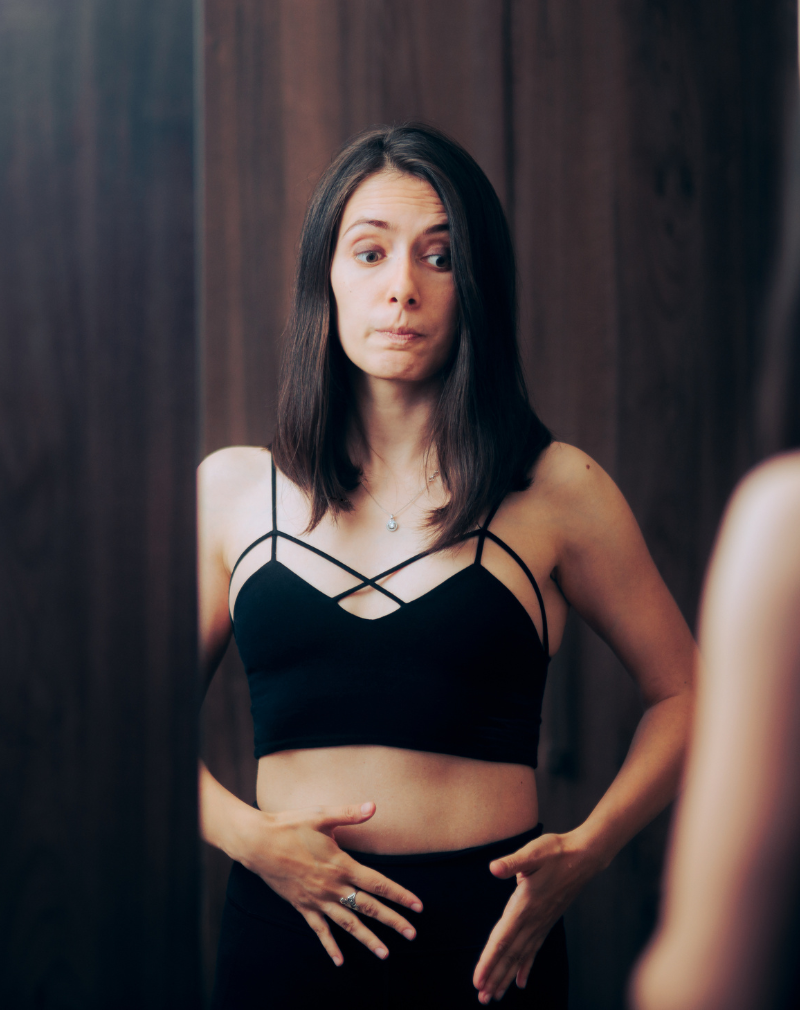
You stand in front of the mirror longer than you mean to. The conversation in your head isn’t kind. It’s measuring, comparing, cataloging what’s wrong.
That gap between what you see and what you feel doesn’t stay contained. It follows you to the kitchen. It sits with you at meals. What started as awareness quietly becomes monitoring, then restriction, then something harder to name.
Most people don’t notice when concern becomes control. The shift happens slowly, in small decisions that feel rational at the time. By the time it feels wrong, the pattern has already taken root.
At The American Wellness Center in Dubai Healthcare City, we work with people navigating this exact tension. Not because they lack willpower or discipline, but because body image concerns don’t live in isolation. They shape behavior, and behavior shapes health.
So what happens when the way you see yourself starts dictating the way you eat? And when does that concern cross into something that needs attention?
When Looking Becomes Measuring
Body checking doesn’t announce itself. It starts as a quick glance in the mirror. Then it’s checking your reflection in car windows, adjusting clothes multiple times, pinching skin to see if anything’s changed.
The mental math begins quietly. Calories eaten versus calories burned. Today’s weight versus yesterday’s. The size you wear now versus the size you wore before. What starts as awareness becomes monitoring.
Here’s what most people miss: the more you measure, the less you trust yourself. Your body stops being something you live in. It becomes something you manage, grade, fix.
This pattern shows up differently depending on the person. Some restrict until the body protests. Others cycle between control and loss of control. Both are the mind trying to solve something food can’t fix.
The Inner Critic’s Influence on Food
There’s a voice that runs commentary on everything you eat. It judges portions. It remembers what you ate yesterday and calculates whether today “counts” as good or bad.
Food stops being neutral. It becomes:
- Earned or unearned
- Safe or dangerous
- A reward for being disciplined or proof you failed again
That voice follows you to meals, to the grocery store, to social events where people are eating without thinking twice. It’s exhausting. The mental load of constant judgment drains energy you didn’t know you were spending.
But you have to understand that you can’t hate yourself into health. Criticism doesn’t create change. It creates shame. And shame makes everything harder, not easier.
When the voice gets loud enough, eating stops feeling like nourishment. It starts feeling like a test you’re failing.
Control as Coping
When life feels uncertain, food feels manageable. You can’t control your job, your relationships, or what happens tomorrow. But you can control what goes on your plate.
Restriction brings temporary relief. Rules feel like structure. Saying no feels like strength. For a while, it works. The mind quiets. The anxiety eases. You feel like you’re handling something.
But here’s what gets missed: control isn’t the same as care. Tightening the rules doesn’t make life less chaotic. It just narrows the world until food becomes the only thing that feels stable.
This is where support matters. Working with professionals trained in nutrition and lifestyle support for eating disorders like the ones at The American Wellness Center in Dubai Healthcare City helps untangle what food is being asked to solve. Because the real issue is rarely about eating. It’s about what eating represents.
The illusion of control eventually cracks. And when it does, the body and mind both feel the cost.
Social Pressure and Comparison
The invisible weight of others’ opinions sits heavier than most people admit. A comment about your appearance. A side glance at what’s on your plate. Cultural expectations about how bodies should look, especially in places where image matters.
Social media makes comparison a reflex. You scroll and measure yourself against curated lives and edited photos. The gap between what you see and what you are becomes another thing to manage.
Comparison becomes a daily habit. You notice who’s thinner, who eats less, who seems to handle it all without effort. It’s automatic. And it’s draining.
Here’s the truth people resist hearing: everyone’s watching you less than you think. Most people are too busy worrying about themselves to scrutinize you. But that doesn’t make the pressure feel less real.
Performing acceptability, trying to meet some invisible standard, takes energy that could go toward living. And eventually, you run out.
When Concern Crosses Into Disorder
The line between concern and disorder isn’t always clear. It’s not marked by a single moment or decision. Patterns tell the story.
Rigidity is one sign. Food rules that were flexible become fixed. Plans revolve around eating or avoiding eating. Withdrawal from social situations because food will be involved.
Preoccupation is another. Thoughts about food, weight, or appearance take up more mental space than anything else. It’s the first thing you think about in the morning and the last thing before sleep.
Behaviors escalate quietly. What started as “eating healthier” becomes eliminating entire food groups. What felt like discipline becomes something harder to stop, even when you want to.
Here’s the uncomfortable truth: waiting for it to “get bad enough” has a cost. Early intervention matters. The longer patterns persist, the harder they are to interrupt.
At The American Wellness Center in Dubai Healthcare City, we provide support for anorexia nervosa and counseling for bulimia nervosa because we know these patterns don’t resolve with willpower alone. They require guidance, structure, and someone who understands what’s underneath.
The Body’s Response to Restriction
When eating patterns tighten, the body responds. Not out of defiance, but survival.
Energy drops first. Then focus becomes harder to hold. Mood shifts in ways that feel disproportionate to small things. Physical health starts showing signs: hair thins, nails weaken, menstrual cycles stop or become irregular.
The body is trying to protect itself. It slows metabolism to conserve what little it’s getting. It prioritizes vital organs over everything else. What feels like the body failing is actually the body adapting to scarcity.
Your body isn’t the enemy. It’s responding to stress you’re placing on it, trying to keep you alive despite the restrictions.
Medical risks grow quietly when restriction persists:
- Weakened immune system
- Heart irregularities
- Bone density loss
- Digestive complications
- Cognitive impairment
These aren’t scare tactics. They’re realities that develop when the body runs on too little for too long. And they’re reversible with the right support, but only if intervention happens before damage deepens.
Rebuilding Trust with Food and Self
Recovery isn’t linear or pretty. Some days feel like progress. Others feel like starting over. That’s normal, not failure.
What support actually looks like is this: structure when you need it, flexibility when you’re ready, and guidance that meets you where you are. It’s not about perfection. It’s about building small habits that slowly restore balance.
The truth is you can’t think your way out of this alone. Insight helps, but patterns this deeply wired need more than awareness. They need professional guidance that understands how body image, behavior, and health intersect.
Recovery asks you to trust the process before you see results. To eat when you’re not hungry. To rest when you feel you don’t deserve it. To believe your body knows what to do when you stop fighting it.
That kind of trust rebuilds slowly. But it does rebuild.
When the Mirror Becomes the Problem
Body image concerns don’t exist in isolation. They shape what you eat, how you move through the world, and whether you feel safe in your own skin. Over time, they influence health in ways that go far beyond appearance.
Change is possible when the right support is in place. Not quick fixes or motivation. Actual guidance that understands how deeply these patterns run and how carefully they need to be addressed.
At The American Wellness Center in Dubai Healthcare City, we work with people navigating this exact struggle. Not because they’re broken, but because healing from body image concerns and disordered eating requires more than willpower. It requires care that sees the whole picture.
Reaching out isn’t admitting defeat. It’s choosing to stop carrying this alone. If this feels familiar, it may be time to talk.