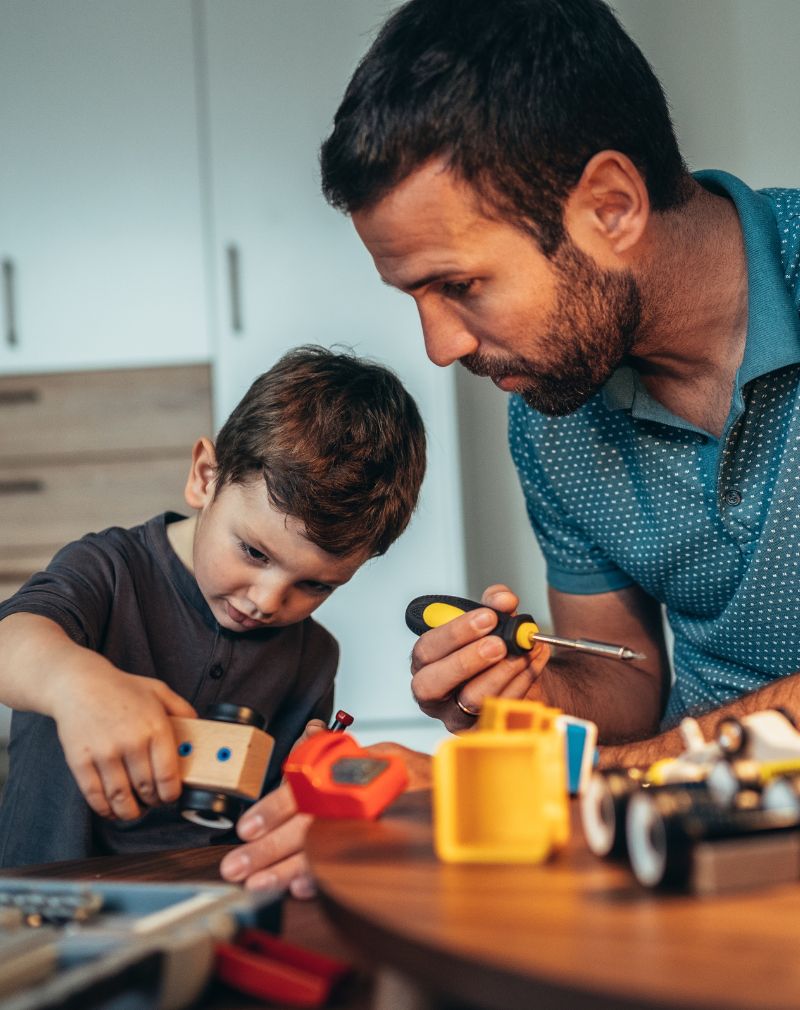
He downloaded the app in August, the week after he shouted at his son in the mall. His son had taken his shoes off in the car and wouldn’t put them back on.
He logged on to the app 10 minutes every morning, before anyone else was up. The app kept count. It said 47 days, and it would have been more if he hadn’t missed a Saturday last month.
It worked, as far as it went. He hadn’t shouted since the mall.
On Sunday evening his son found out that swimming had moved from Tuesday to Thursday. He went into his room, shut the door and screamed for 40 minutes.
His father sat on the floor in the corridor with his back to the wall and breathed the way the app had taught him, in for four and out for six. He didn’t go in, and he didn’t raise his voice.
The app had made him much better at waiting it out. It hadn’t changed how long it lasted.
A 2026 review brought together 25 years of research on mindfulness programmes for parents. The programmes reliably lowered parenting stress, though the effects were small, and for children’s behaviour and mental health the results were inconclusive. (Clinical Psychology: Science and Practice, 2026)
The breathing helped the man sitting outside the door, and the research suggests he’s mostly who it helps.
The American Wellness Center in Dubai Healthcare City runs Parents Skills Training for parents who have their own half under control and want to know what to do about the other half.
When the same fight happens every day
In some homes you could time the evening fight. Bath at 7, refusal by 7:05, and somebody in tears by half past.
Breaking that takes a plan worked out ahead of time: what gets praised, what gets ignored, what the consequence is, and an agreement that both parents will do the same thing. The pause helps you stick to a plan once you have one.
The same review looked at this as well. In the few studies that compared the two, adding mindfulness to standard parent training didn’t improve results for children beyond the training alone. (Clinical Psychology: Science and Practice, 2026)
In Finland, 3,204 families of 4-year-olds went through an 11 week parent training programme online, with a coach on the phone once a week. Six months after they started, 77% of the children were showing less disruptive behaviour. (Journal of Medical Internet Research, April 2026)
Problems that had gone on for more than a year were less likely to improve much. There was no comparison group, so some of those children might have settled anyway. 4 year olds do that.
Before asking for help, keep notes for a week. For each blow up, write down:
- The time it started
- What happened just before
- How long it lasted
- What you did
- What happened after
When the fight still runs the same way after you’ve changed your own half of it, behaviour and discipline management strategies give you the plan to go with the pause.
When the meltdown isn’t about you
About 1 in 31 eight year olds in the US have been identified with autism. (CDC, 2025) ADHD and sensory sensitivities are easy to mistake for bad behaviour too, especially at 7.
What helps here is built around the child you have. That might mean telling him about Thursday on Sunday morning instead of Sunday night, or a picture plan of the week stuck on the fridge.
Some of it needs an assessment first, so you know what you’re working with. Parenting neurodiverse or high needs children is for parents doing this every day, whether or not there’s a diagnosis yet.
When they’ve stopped telling you things
His daughter is 13, and these days she tells her aunt things she doesn’t tell her parents. Her mother heard about the friendship that ended from her sister, two weeks late.
Being calmer helps once she’s talking. Getting her to start again is a separate job, especially if the talking stopped back in Grade 6.
Sometimes part of the help is for the parent. In the Finnish study, parents with more stress or anxiety of their own saw weaker results for their children.
When most of what you say to each other is about lifts and lunch money, parent and child communication helps get the rest of it going again.\
Day 48
The next morning he did his 10 minutes anyway, on the edge of the bed before anyone else was up.
He should keep doing them. Every plan in this blog is easier to stick to for a parent who isn’t shouting.
The Parents Skills Training team at The American Wellness Center in Dubai Healthcare City can help with the rest, starting from that week of notes.
Book a first session and bring them with you.
Swimming is on Thursdays now. His son has asked twice already whether it’s still Thursday.