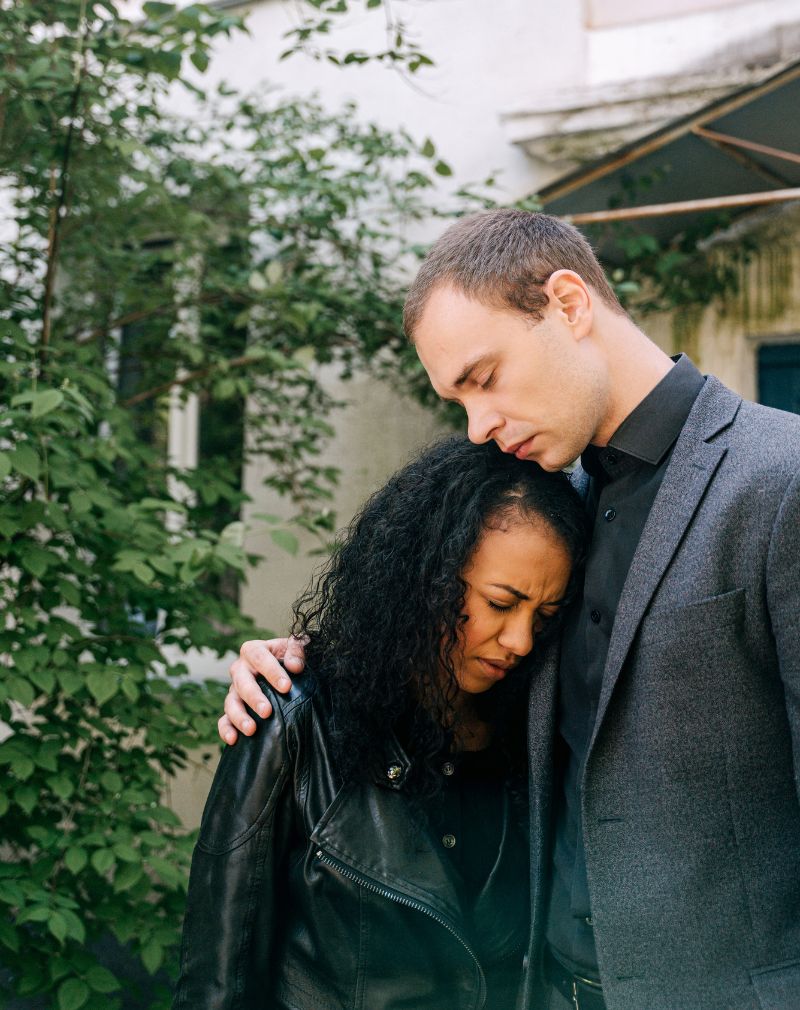
Nobody tells you it’s going to feel like translation. Not of language, but of yourself. Who you were at home, who you’re expected to be here, and somewhere in the middle, the version of you that isn’t sure she belongs to either.
Acculturation stress is consistently linked to depression and comorbidity, with the association being strongest among women. These aren’t numbers from extreme cases. They describe women who are, by most measures, functioning fine. PubMed Central
The Female Mental Health team at The American Wellness Center in Dubai Healthcare City sees this regularly. Women who arrived capable and ready, and who quietly fell apart in ways they couldn’t name.
This blog looks at what that actually costs: the identity strain, the invisible pressure, and why crossing cultures so often lands hardest on women.
The Identity Disruption Nobody Warns You About
Most women who move cultures don’t lose themselves dramatically. They lose themselves gradually, in small daily decisions about how to speak, how to dress, how much to explain.
You carry who you were at home. But the new environment doesn’t always have space for that person. So you start editing, adjusting, filing parts of yourself away until you’re not sure which version is the real one.
The loneliness this produces is specific. It’s not the loneliness of being alone. It’s the loneliness of being present in a room and still not quite belonging to it. Women describe this long before they describe feeling depressed or anxious, because the belonging problem arrives first.
What makes it harder is that this disorientation looks fine from the outside. You’re coping. You’re adapting. And privately, something keeps slipping.
The Pressure That Falls Unevenly
Cultural expectations don’t distribute evenly between men and women. For women, the pressure to adapt is layered across almost everything: how the home is run, how children are raised, how much of the old culture is preserved, how quickly the new one is adopted.
Family expectations travel with you. The role you held back home doesn’t disappear just because the geography changed. Many women find themselves managing two sets of demands simultaneously, the expectations they brought and the ones the new environment is adding.
The emotional signals that something more than normal adjustment is happening tend to look like this:
- Persistent irritability with no clear cause
- Difficulty feeling at ease, even in safe situations
- A quiet sense of failing at something you can’t quite name
- Withdrawing from relationships that once felt easy
These aren’t personality flaws. They’re the predictable result of carrying too much without enough support to carry it.
When the Body Takes the Weight
Acculturative stress doesn’t always announce itself as emotional distress. Research shows that high levels of acculturative stress are associated with a blunted cortisol response, a sign that the body’s stress regulation system has been running under strain for too long. By the time a woman notices something is wrong, her body has often been signalling it for months.
The association between acculturative stress and sleep disturbance is significantly stronger in women than in men, which matters because disrupted sleep compounds everything: mood, concentration, physical resilience, and the capacity to keep adapting.
Chronic exposure to this kind of stress can gradually degrade the immune system and overload the body’s compensatory mechanisms, sometimes surfacing as conditions that seem purely physical until the underlying stress is addressed. For women already managing a chronic health condition, this layering is rarely a coincidence. Psychological care for chronic medical conditions often becomes relevant precisely at this intersection, when the body is carrying what the mind hasn’t had space to process.
The tiredness is real. The tension is real. And both deserve more than being told to give it time.
Grief, Loss, and Life Transitions in a New Country
There’s a particular kind of grief that doesn’t have a name. Not the grief of death or dramatic rupture, but the grief of leaving. Of the friendships that didn’t survive the distance. Of the rituals that don’t translate. Of the version of yourself that only existed in the place you left.
Most women don’t call it grief. They call it adjustment. They keep moving because stopping feels indulgent. But the loss accumulates quietly, and at some point the weight of it becomes hard to ignore.
This grief intensifies around life’s harder moments. For some women, the most painful experiences happen far from home: a pregnancy loss, a birth that left them shaken, a health crisis that arrived without their community around them. Carrying that without familiar faces nearby is its own particular kind of alone. Miscarriage, birth trauma, and grief support exists because these losses need proper space, not just time.
Grief doesn’t require a dramatic event to be real. Sometimes it’s the accumulation of smaller things: the holidays that felt hollow, the phone calls that couldn’t replace being present, the slow realization that home has become complicated in both directions.
What Actually Helps
The support that tends to work for women in cultural transition isn’t generic. It accounts for the specific pressure of existing between two worlds, and it doesn’t ask you to resolve that tension by choosing one over the other.
Adjustment and assimilation are not the same thing. Adjustment means finding a way to function in a new environment. Assimilation often means erasing what came before to do it. Many women are pushed, subtly and not so subtly, toward the second when what they actually need is help with the first.
Culturally sensitive therapy creates space for both. It doesn’t treat your background as a complication. It treats it as context, and works with the whole of who you are rather than the version of you that fits most easily into the new environment.
What this kind of support tends to involve:
- Exploring the identities you’re holding, rather than forcing a choice between them
- Processing the grief and loss that comes with transition, including losses others don’t recognize as losses
- Building coping that doesn’t require abandoning who you were
- Understanding how cultural expectations have shaped your sense of self, often long before this move
Multicultural and expatriate female mental health support is built around exactly this. The goal isn’t to help you adapt faster. It’s to help you stay whole while you do.
You don’t have to become a different person to build a life here. That’s worth saying plainly, because many women have started to believe otherwise.
When Adaptation Feels Like Too Much
Cultural transition doesn’t resolve neatly. For many women, it remains an ongoing negotiation, between who they were and who this place is asking them to become.
Struggling with that doesn’t mean something is wrong with you. It means you’re carrying something real, and carrying it largely without acknowledgment.
The difficulty is the point. It deserves proper attention, not just patience.
If any part of this felt familiar, that recognition matters. It’s worth paying attention to, not pushing past. Speaking with someone who understands the specific weight of this, not just the general concept of stress, can change what the next chapter feels like.
The Female Mental Health team at The American Wellness Center in Dubai Healthcare City offers support that meets you where you are, not where it’s easier to begin. If you’re ready to talk, reaching out is a reasonable place to start.